

Dental crowns help many people restore damaged teeth and get back a strong bite. They give confidence and long term protection to a weak tooth. Still, every dental treatment has some limits, and it helps to know them before you decide. Here are the top 5 risks connected with dental crowns.
Risk or Disadvantage | Description | Cause or Trigger | Management and Mitigation | Resource Commitment | |
|---|---|---|---|---|---|
Higher Cost | Crowns are more expensive than simple fillings. | The need to cover the full tooth and a laboratory fabrication process. | Considered a long-term investment for durability. | High cost. | |
Possible Need for Root Canal | The inner nerve of the crowned tooth may become affected. | Nerve damage over time or after the procedure. | Regular dental check-ups to catch issues early. | Requires additional procedures (root canals). | |
Chipping Risk | The porcelain material can chip under pressure. | Biting on hard foods like nuts or ice. | Choose durable materials and avoid biting hard foods. | Standard procedure; no additional cost mentioned. | |
Tooth Sensitivity | Sensitivity to hot or cold temperatures. | Tooth structure is reshaped during the procedure. | Usually settles within a few weeks as the tooth adjusts. | Standard procedure; no additional cost mentioned. | |
Gum Irritation | Irritation of the tissue near the crown placement. | The crown sits close to the gum line. | Maintain good oral hygiene and ensure a well-fitted crown. | Standard procedure; no additional cost mentioned. |
1. Tooth Sensitivity
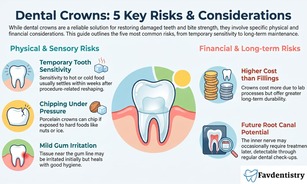
After a crown is placed, some peopleDisadvantages of Dental Crowns: Top 5 Risks to Know feel sensitivity to hot or cold food. This happens because the tooth structure gets reshaped during the procedure. In most cases this sensitivity settles down within a few weeks as the tooth adjusts.
2. Chipping Risk
Crowns made of porcelain can chip if they face strong pressure, like biting on hard nuts or ice. Choosing a durable material and avoiding hard foods keeps the crown in good shape for years.
3. Gum Irritation
A crown sits close to the gum line, so some people notice mild gum irritation right after placement. Good oral hygiene and a well fitted crown help the gum tissue settle and heal smoothly.
4. Higher Cost Compared to Fillings
Crowns cost more than simple fillings because they cover the full tooth and need a lab process. This investment pays off through long term durability, so it works well for people who want a lasting solution.
5. Possible Need for Root Canal Later
In some cases, a tooth under a crown may still need a root canal if the inner nerve gets affected. Regular dental checkups catch this early, so treatment stays simple and quick. Sometimes the crown fell out for loose fittings
Final Thought
Dental crowns remain a reliable choice for restoring teeth when placed with proper care. Knowing these points helps you plan ahead and keep your smile strong and healthy for a long time.
