

A loose denture does not need glue to stay put. Adhesive strips, soft cushions, reline kits, and a proper refit all hold a denture in place without the paste, the taste, or the daily mess.
The safest alternatives to denture glue are adhesive strips, cushion pads, denture powder, thermoplastic reliners like Cushion Grip, at home reline kits, and implant retained dentures. Aloe vera gel and coconut oil work too, though they hold for a shorter stretch of the day. If your denture slips every day no matter what you use, a professional refit fixes the actual cause instead of masking it.
Key Takeaways
- Adhesive strips and pads give a mess free hold with no paste to spread.
- Cushion Grip and similar thermoplastic products act like a soft reline and hold for up to 4 days.
- Zinc in traditional adhesive cream is safe in normal use but risky with heavy daily use over months. Choose a zinc free formula when possible.
- At home reline kits cost $20 to $60 and fix a loose fit for weeks at a time.
- Household glue is never safe for dentures. It can burn your gums and cause harm if swallowed.
- Needing adhesive every single day usually means your denture needs a professional reline, not more glue.
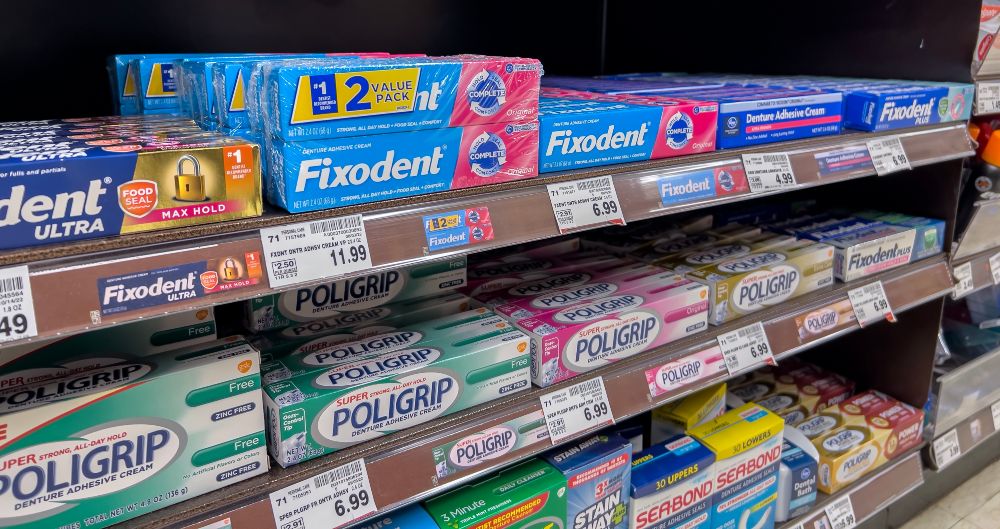
What to use instead of denture glue
Denture glue is not the only way to keep a denture in place, and it is often not the best one. Some traditional adhesive creams use zinc to strengthen their hold, and heavy long term use of that ingredient carries a real health risk covered in detail below. That alone sends a lot of denture wearers looking for a substitute.
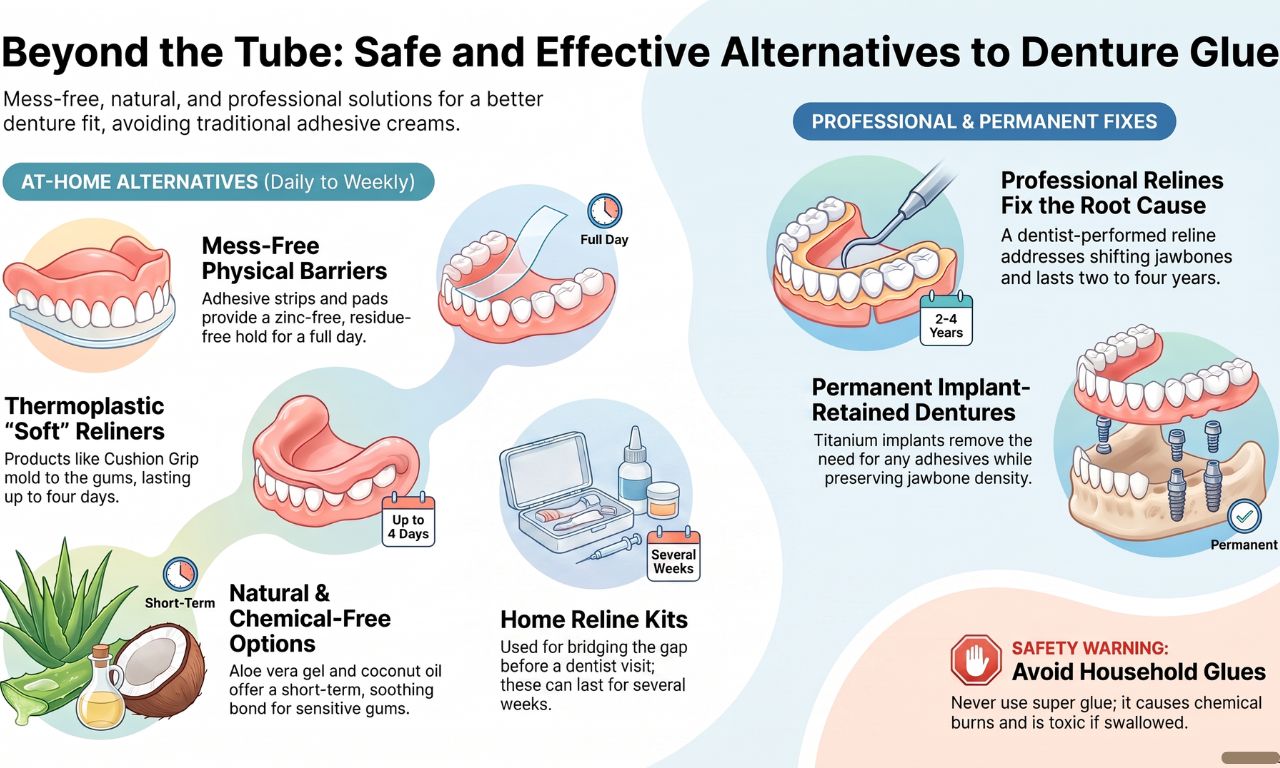
The options fall into a few groups. Physical alternatives include adhesive strips, cushion pads, and denture powder, all designed for the mouth and sold at any pharmacy. Thermoplastic products like Cushion Grip act more like a soft reline than a glue. Reline kits and a professional refit address the fit itself so you need less adhesive of any kind. Natural options like aloe vera gel and coconut oil appeal to people who want to skip synthetic ingredients. And for a permanent fix, implant retained dentures remove the need for adhesive altogether.
Each option suits a different situation, and upper dentures, lower dentures, and partials each behave differently too, which the sections below cover directly. The right pick depends on how loose your denture is, how long you need the hold to last, and whether you want a daily product or a one time fix.
Zinc Free safety warning: what every denture wearer should know
This is the single most important safety point in this guide. Some denture adhesive creams contain zinc because it strengthens the bond. Used occasionally and as directed, zinc containing adhesive is considered safe by manufacturers and regulators. Used heavily over months or years, it carries real risk.
The FDA has reviewed adverse event reports linking heavy, repeated use of zinc containing denture cream to nerve damage, including numbness, tingling, and weakness in the hands and feet. The mechanism is specific: excess zinc in the body blocks copper absorption, and low copper over time can damage the nervous system. A single tube is meant to last around 7 to 8 weeks under normal use. Someone going through two or more tubes a week faces the highest risk.
Because of these reports, one major manufacturer removed zinc from its formula entirely, and others lowered zinc levels across their product lines. The clearest step you can take is simple: check the ingredient label, pick a zinc free denture adhesive where you can, and never use more than the amount the package recommends.
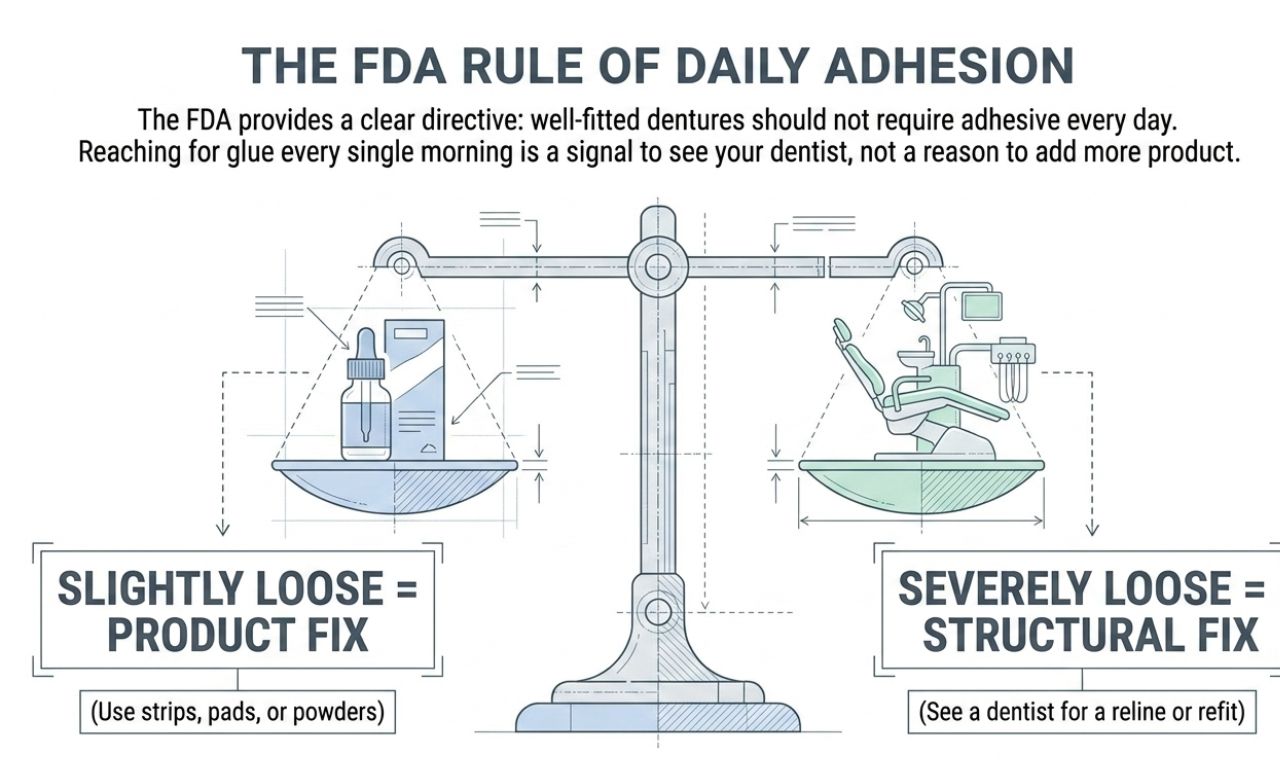
The FDA has also made a broader point worth repeating here. A well fitted denture should not need adhesive every day. Reaching for adhesive daily is a signal to book a dentist visit for a reline or refit, not a reason to add more product.
Get a proper refit or reline first
A denture that fits well stays in place on its own most of the day. Gums and jawbone shift over time, even years after you first got your denture, and that gradual shift is what turns a snug denture into a loose one.
A dentist can adjust the fit in office, often in the same visit, or reline the denture with fresh material against your gums. A professional reline typically runs $150 to $750 per arch, with soft relines on the lower end and hard relines on the higher end. Most people need one every 2 to 4 years.
That cost sounds steep next to a $10 tube of adhesive, but it solves the problem at the source instead of covering it up every morning. If your denture was fitted more than 2 years ago and you find yourself using adhesive daily, book a fitting check before trying any of the alternatives below. It may remove the need for adhesive completely.
Denture adhesive pads, strips, and powder
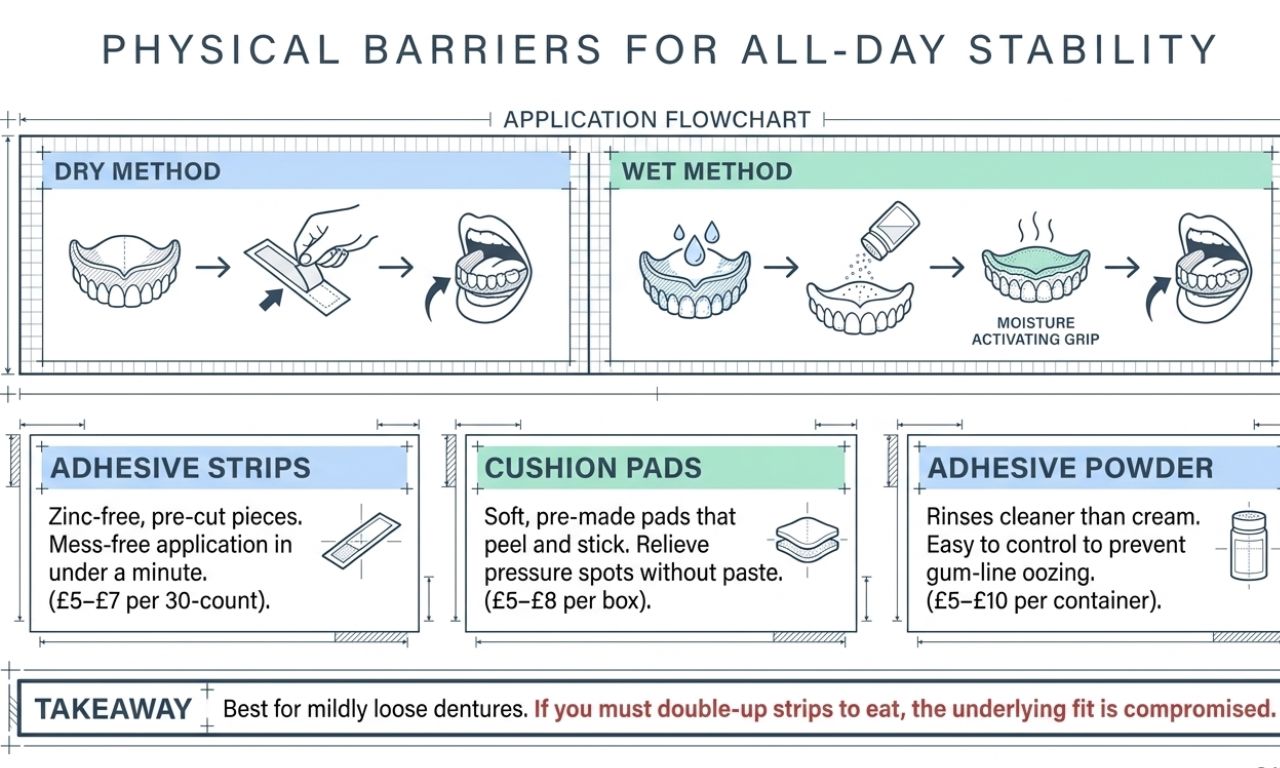
Pads, strips, and powder are the three most common daily alternatives to cream, and each applies a little differently. Adhesive strips are thin, pre cut pieces that stick to the underside of a dry denture. Press the strip on, seat the denture, and you are done in under a minute with no residue on your hands or gums. Sea Bond is the most recognized brand here, with 30 count boxes running roughly $7 to $9 at most pharmacies, and the strips are zinc free with an all day hold rating.
Cushion pads work on a similar principle but add a soft layer that fills small gaps and eases pressure points, which also helps with sore spots. Powder goes on differently: you sprinkle a small amount onto the wet denture surface, and the moisture activates it into a secure grip within seconds. Powder applies thinner than cream and rinses off cleaner at night, which makes it easier to control for first time users.
All three suit mild to moderate slipping. If you need to double up a strip or pad just to get through a meal, that points to a fit problem a product cannot solve on its own.
Cushion Grip and other thermoplastic reliners
Cushion Grip and similar products occupy a middle ground between adhesive and reline. The manufacturer is direct about this: it is not a glue, it acts like a soft reline. You warm the material, mold it into the denture base, and it hardens into a custom cushioned layer against your gums.
A 1 oz package runs about $24 for a 2 pack up to $50 for a 5 pack, and each application holds for up to 4 days rather than resetting every morning. That makes it noticeably cheaper per day of wear than daily strips or cream, and it is zinc free and waterproof.
This option fits people whose denture is loose enough that daily adhesive feels like a chore, but who are not ready to commit to a professional reline yet. It buys real comfort while you schedule that dentist visit.
At home reline kits for a longer fix
Reline kits go a step further than thermoplastic products. Brands like Dentemp and Denttach include a reline resin plus full instructions, and a kit typically costs $20 to $60 and includes enough material for 2 to 3 applications.
The process reshapes the fit of the denture itself rather than adding a removable layer, so the hold lasts noticeably longer than any daily adhesive, often several weeks per application. To use one, clean the denture and remove any old adhesive first, mix the reline material as directed, apply it inside the denture, then bite down gently so it takes the shape of your mouth before it sets.
Dentists are clear that these kits are a temporary bridge, not a permanent substitute for a professional reline. Getting the fit wrong at home can create pressure points or, in some cases, damage the denture. Use a kit to get comfortable in the short term, then follow up with a professional fitting.
Natural Ways to Keep Dentures in Place: As an Alternative
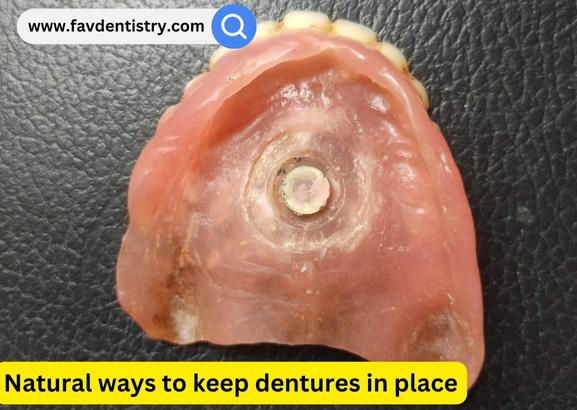
Aloe Vera Gel
Aloe vera gel holds dentures in place while soothing the gums underneath. Apply a small amount to the clean denture surface, then press the denture firmly against your gums. The gel creates a gentle bond and calms irritation at the same time. Pure aloe vera gel is widely available at pharmacies and health stores.
Coconut Oil
Coconut oil offers a similar natural hold. It carries antimicrobial properties that support a cleaner mouth throughout the day. Spread a thin layer on the denture, then press it into place. The oil forms a light seal that keeps the denture stable for several hours. Coconut oil is safe to swallow in small amounts, which makes it a comfortable choice for many wearers.
Upper denture vs lower denture: different retention needs
Upper and lower dentures do not behave the same way, and treating them identically leads to poor results. An upper denture rests against a wide, flat palate, which gives natural suction a large surface to work with. This makes upper dentures noticeably more stable, and many wearers find they need little or no adhesive at all.
A lower denture rests on a narrow ridge and shares space with the tongue, which constantly shifts the denture during talking and eating. That makes lower dentures far more prone to slipping. A soft liner, a reline, or a thin line of adhesive spread along the ridge tends to work better on a lower denture than the thicker layer people apply to an upper one.
If your lower denture moves constantly no matter what you try, treat that as a strong sign it needs a professional adjustment rather than a stronger product.
Partial denture adhesive alternatives
Partial dentures clip onto your remaining natural teeth using metal or plastic clasps, so they hold differently than a full denture and need a different approach. Standard adhesive pads made for full dentures often do not fit a partial’s shape well and can peel at the edges.
Instead, look for adhesive labeled specifically for partial dentures, or ask your dentist about tightening or adjusting the clasps for a firmer mechanical grip. A well adjusted clasp is usually more effective and more comfortable than any adhesive for keeping a partial in place, and it costs nothing extra if you are already at the office for a checkup.
What to avoid, and how to clean up old residue
Not every household item belongs near a denture. Super glue, craft glue, and other non dental adhesives are made from chemicals never tested for contact with gum tissue. They can burn soft tissue on contact, and swallowing even a small amount poses a real poisoning risk. Chewing gum is not a safe substitute either, since it creates a choking risk and does not bond reliably, and excess toothpaste offers little real hold despite being a common online suggestion.
If a product is not labeled and sold specifically for denture use, keep it out of your mouth.
Leftover adhesive residue on your gums or denture can cause irritation if it builds up, so clean it off daily. Rinse your mouth with warm water to loosen residue on the gums, then gently brush the gums with a soft brush to lift what remains. Soak the denture in warm water with a denture cleaning tablet for the time listed on the package, then brush the denture surface with a soft denture brush and rinse thoroughly before placing it back in your mouth. Avoid scraping residue off with sharp objects, since that can scratch the denture surface and create spots where bacteria collect.
Implant retained dentures: the permanent alternative
For a wearer who is done with daily adhesive of any kind, implant retained dentures remove the need entirely. Small titanium implants are placed in the jawbone, and the denture snaps onto them directly, giving a secure hold without any strip, cream, or reline.
The benefits go beyond convenience. Implants help preserve jawbone density, which naturally shrinks over years of denture wear, and most patients report a real improvement in chewing strength and speaking clearly compared to a traditional denture.
The tradeoff is the process itself. Implants require a surgical procedure, a healing period of several months, and a higher upfront cost than any product on this list. Bone density and overall health also factor into whether a patient qualifies. For someone tired of managing fit every single day, though, many describe it as the change that finally solved the problem for good.
Denture glue alternatives compared
Alternative Method | Product Type | Typical Hold Time | Estimated Cost | Best Suited For | Key Benefits | Potential Drawbacks | |
|---|---|---|---|---|---|---|---|
Implant retained dentures | Professional / Surgical | Permanent | High upfront (Not in source) | Long-term stability without adhesives | Preserves jawbone density, improves chewing strength and speech, no adhesive needed | Requires surgery and healing period; bone density requirements; high cost | |
Professional reline | Professional | 2 to 4 years | £118.00 – £590.00 | Fixing the root cause of a loose fit | Addresses gum/bone shift directly, solves problem at source, professional fit | Higher upfront cost compared to temporary products | |
At home reline kits | Reline kit | Several weeks | £15.00 – £47.00 | Bridging the gap before a dentist visit | Reshapes the fit of the denture, longer lasting than daily adhesives | Risk of getting fit wrong at home; can create pressure points or damage denture | |
Cushion Grip | Thermoplastic | Up to 4 days | £19.00 – £39.00 | Moderate looseness and fewer daily applications | Acts like a soft reline, zinc-free, waterproof, cheaper per day of wear | Requires warming and moulding; only a temporary bridge before a professional visit | |
Adhesive strips | Physical | Full day | £5.50 – £7.00 | Mild slipping and mess-free routine | Zinc-free, no residue on hands/gums, pre-cut for convenience | Not suitable for significantly loose dentures; may need doubling up if fit is poor | |
Cushion pads | Physical | Full day | £4.70 – £7.80 | Comfort and sore spot relief | Adds cushioned layer, fills small gaps, softens pressure points | Will not out-perform a professional reline for very loose dentures | |
Adhesive powder | Physical | Full day | £4.70 – £9.40 | Thinner application and easy cleanup | Rinses off cleaner than cream, avoids oozing, easy to control amount | Requires wet surface to activate; still a temporary bonding agent | |
Aloe vera gel or coconut oil | Natural | A few hours | Under £8.00 | Chemical-free and gentle on gums | Soothes irritated tissue, antimicrobial properties (coconut oil), no synthetic ingredients | Short hold time; requires frequent reapplication; light seal only |
Summary: choosing the right denture glue alternative
Start with the cause, not the symptom. If your denture only slips occasionally, adhesive strips, cushion pads, or powder solve that without any of the drawbacks of traditional glue. If it slips daily, Cushion Grip or a reline kit buys comfortable time while you book a dentist visit.
Pay attention to which denture you are treating, too. An upper denture usually needs less help than a lower one, and a partial does better with a tightened clasp than a pad made for a full denture. If a dentist confirms the fit itself is the issue, a professional reline addresses it directly and lasts years rather than hours. And if you are ready to stop managing adhesive altogether, implant retained dentures remove the need for good.
Whichever you choose, keep it to products made for oral use, watch your zinc exposure if you use cream, and clean off residue daily. Match the option to how loose your denture actually is, and you will land on the right one faster than trial and error ever will.
FAQ
Is it safe to use household glue on dentures? No. Super glue and craft glue are not formulated for contact with gum tissue and can burn soft tissue on contact. Swallowing even a small amount poses a real health risk, so only use products labeled specifically for denture use.
How long do denture adhesive strips last compared to cream? Strips and cream both hold for a full day under normal use. Strips tend to feel cleaner during application and removal, while cream can spread more evenly across a larger surface for people with a more uneven fit.
Can I use aloe vera gel every day on my dentures? Yes, daily use is generally fine for most people, though it holds for only a few hours at a time. Patch test it first, and stop if you notice any irritation.
Why does my denture need adhesive every single day? Daily reliance on adhesive is a common sign that the denture no longer fits your gums the way it used to. Gum and bone shape change gradually over the years, and a professional refit or reline usually resolves it.
How much does a denture reline cost? A professional reline typically costs $150 to $750 per arch, depending on whether it is a soft, hard, or temporary reline. At home reline kits run $20 to $60 and offer a shorter term fix.
Are zinc free denture adhesives safer than regular ones? Zinc free formulas remove the risk tied to zinc buildup from long term, heavy use of traditional adhesive creams. For anyone using adhesive daily over months or years, a zinc free option is the safer standing choice.
